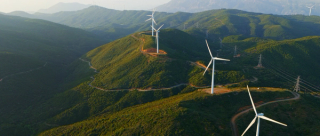
SBTi Corporate Net-Zero Standard Version 2.0
by Jovontae Catline , Caroline Dolan, Joe Sarvary, Liz Whinnett
View post
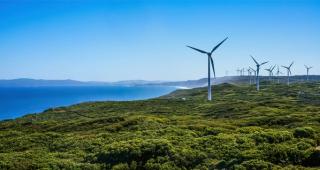
The success of an onshore wind projects is rarely defined by a single issue, but by a complex set of interconnected ‘critical paths’. This includes grid connection and network capacity, planning and environmental approvals, community and stakeholder acceptance, ecology and biodiversity considerations, engineering and constructability constraints, and land access and tenure arrangements.
In this Onshore Wind Critical Path Thought Leadership Series, our technical teams will explore these topics in detail, highlighting challenges and presenting potential solutions.
Articles in the series so far:
Ecology and biodiversity are increasingly becoming key determinants of project success for onshore wind. Species constraints, habitat impacts, survey requirements, and evolving regulatory expectations can all influence project design, approval pathways, and delivery schedules. In the first article of our Onshore Wind Critical Path Thought Leadership series, Natalie Toon explores the ecological risks facing onshore wind projects and shares practical strategies to identify and manage these early, improving certainty and outcomes.
Australia’s renewable energy pipeline continues to accelerate, but for many onshore wind projects, ecology has become one of the defining project risks.
Bird and bat collision risk is no longer just an environmental compliance issue. It is increasingly shaping:
In many cases, ecology is now as critical as engineering in determining whether a project proceeds.
Across Australia, developers are working within an evolving and often inconsistent approvals environment. Expectations around bird and bat utilisation surveys, collision risk assessments, operational monitoring, and adaptive management have increased significantly, although inconsistently across Australia in recent years – particularly under Commonwealth approvals processes.
The challenge for industry is not simply the need for more ecological data. It is the uncertainty created by varying regulatory expectations, changing species risk profiles, and differing operational conditions imposed between projects and jurisdictions.
Projects now often require multi-season or multi-year survey programs before approval pathways become sufficiently clear. Others face long-term operational monitoring obligations and fatality thresholds that can materially affect operational certainty and financing risk.
At the same time, turbine scale, project footprints, and cumulative impacts across renewable energy zones continue to grow, increasing both the complexity and scrutiny of ecological assessments.
As a result, biodiversity is increasingly viewed as a core project design consideration rather than a downstream approvals hurdle.
Leading developers are responding by integrating ecological intelligence earlier in the project lifecycle (during site selection, feasibility, and concept design) rather than attempting to retrofit solutions during the approvals process.
The industry’s mitigation toolkit is also expanding. This is driving more proactive mitigation and operational strategies, including micro-siting turbines away from key flight paths and habitat areas, smart curtailment during higher-risk activity periods, and real-time monitoring systems using radar, cameras, and acoustic detection technologies.
These approaches are helping improve approval outcomes and operational certainty, but they also introduce new technical and commercial considerations that must be carefully balanced against energy yield and project economics.
The projects achieving the smoothest approval pathways are increasingly those that treat ecology as a strategic project risk from day one – not simply a compliance workstream to be addressed later.
Australia’s energy transition depends on delivering onshore wind generation at unprecedented scale and speed. Achieving that outcome will require greater consistency in regulatory expectations, earlier ecological engagement, and a more integrated approach between environmental and engineering disciplines.
At SLR, we are seeing firsthand how early ecological and approvals advisory input can help developers reduce uncertainty, improve project bankability, and achieve more efficient approval pathways in an increasingly complex regulatory environment.
Contact our team to learn more about our energy services and how we can help your onshore wind project navigate approvals pathways.
Get in touch
by Jovontae Catline , Caroline Dolan, Joe Sarvary, Liz Whinnett
by James Balik-Meacher, Sophia Davison, Miguel Oyarbide
by Selina Roman-White, Valeria Alvarado Tejeda, Madison Edson, James Van Horne, Craig Bock, Matthew Mitchell